
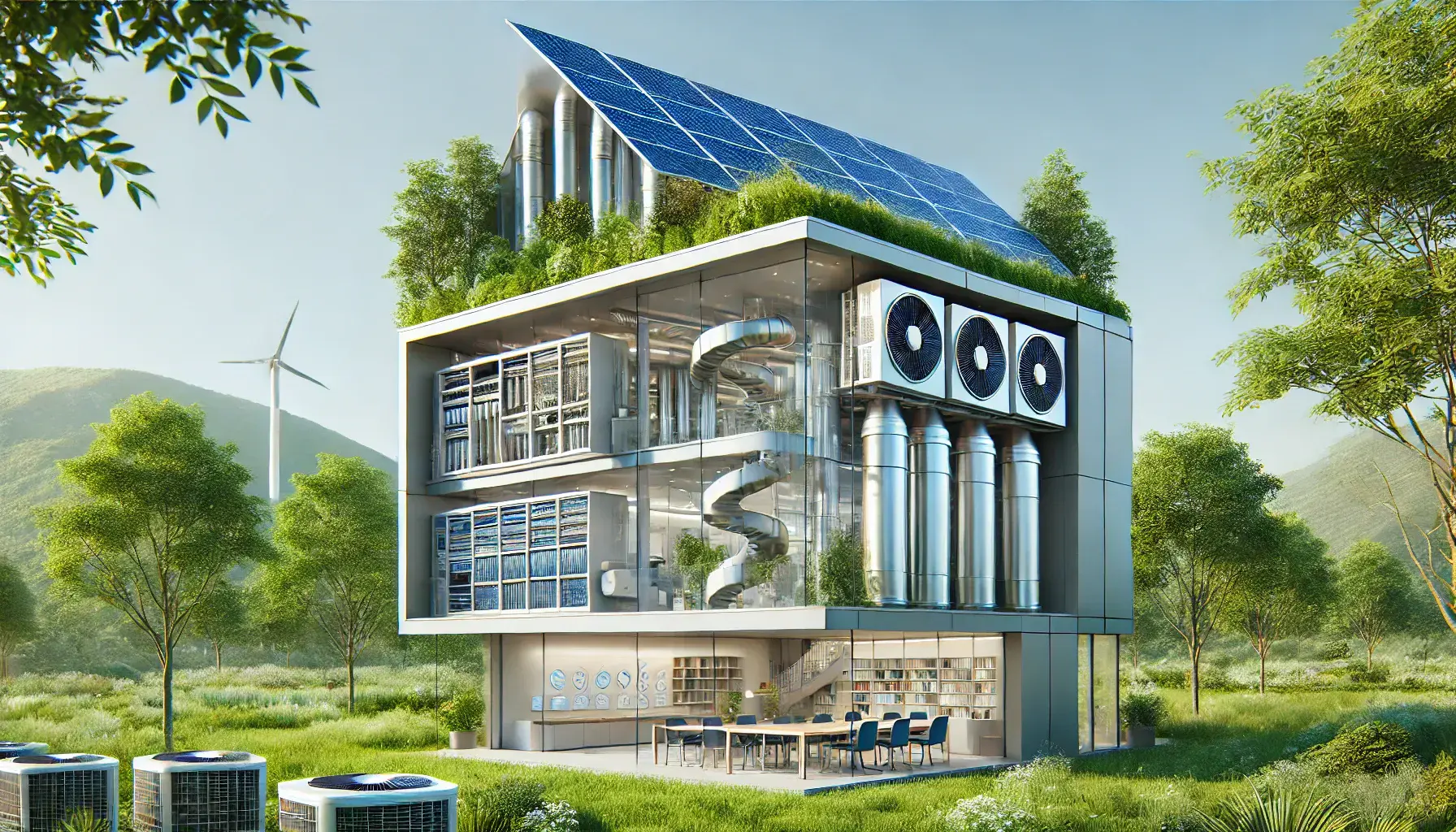
Commercial Buildings Trending Toward a More Sustainable Future
The commercial building sector is shifting how it approaches HVAC as part of broader sustainability goals. Owners and occupants increasingly expect lower energy use, reduced emissions, long-term cost benefits, and a smaller carbon footprint.
Sustainable practices now play a central role in decarbonization, energy efficiency, and the use of cleaner energy sources. Both market demand and regulatory pressure are accelerating the change.
What "Sustainable" Means in Practice
A sustainable building operates in a resource-efficient way across its full life cycle — covering energy, water, materials, indoor environmental quality, waste, and overall design and operation.
In practice, the focus moves toward zero or near-zero emissions: operating on low-carbon energy and offsetting what remains. New construction offers a clean slate, but retrofitting existing buildings is equally important — a large share of today's commercial floor area will still be in use decades from now.
Operational efficiency matters as much as the equipment itself. Systems that run only when needed, combined with proper end-of-life handling, determine whether a project delivers real sustainability gains — not just lower energy ratings on paper.
The Four Pillars of Sustainable Commercial HVAC
Electrification
Moving from gas boilers to air-to-water and water-to-water heat pumps. The primary path to reducing on-site emissions in large commercial buildings.
Controls & Software
Monitoring software, remote diagnostics, and analytics keep equipment running near peak efficiency and reduce unnecessary runtime significantly.
Indoor Air Quality
Air quality and thermal comfort are increasingly treated as baseline requirements for occupant wellbeing, not optional add-ons to an energy upgrade.
Compliance
Tightening building regulations and emissions targets are turning sustainability from a preference into a legal and commercial requirement.
Equipment Choices for Lower Emissions
Heat Pumps
Large commercial buildings with centralized hydronic systems are moving from traditional boilers toward air-to-water and water-to-water heat pumps. Advances in heat pump technology are making these replacements practical even in large structures.
Geothermal Systems
Geothermal uses stable ground temperatures for heating and cooling, further reducing fossil fuel reliance. Initial cost is higher, but long-term efficiency gains can justify the investment in the right projects.
Thermal Energy Storage
Combining thermal storage with heat pumps expands the range of applications — allowing energy to be used when it is cheapest and cleanest, rather than when demand peaks.
Optimization Through Controls and Software
Efficient equipment alone is not enough. How systems are operated has equal impact. Modern building management systems use real-time monitoring, predictive analytics, and remote diagnostics to keep equipment at peak efficiency.
Artificial intelligence is beginning to play a role in load forecasting and automated adjustments — reducing manual intervention and catching performance drops before they become expensive faults.
Buildings with well-integrated controls typically achieve 15–30% better energy performance than those relying on manual operation alone — using the same physical equipment.
Indoor Air Quality and Occupant Wellbeing
Filtration, ventilation rate, humidity control, and thermal comfort are increasingly treated as baseline requirements — not optional extras. Poor indoor air quality affects productivity, health, and tenant retention.
Modern heat pump systems can deliver heating, cooling, and ventilation from a single integrated system, simplifying both installation and ongoing management.
Regulations and Compliance Pressure
UK building regulations, energy performance requirements, and net-zero commitments are all tightening. The Future Homes Standard, Minimum Energy Efficiency Standards, and increasing carbon pricing are turning sustainability from a preference into a commercial requirement.
Buildings that do not meet emerging standards face growing risks: reduced asset value, difficulty attracting tenants, and potential retrofit costs that dwarf the savings from deferring action.
| Driver | What It Means in Practice |
|---|---|
| Future Homes Standard | New commercial builds must significantly reduce emissions from 2025 |
| MEES Regulations | Minimum energy ratings required to let commercial property |
| Net Zero Targets | Pressure on large organisations to decarbonize supply chains |
Planning a Sustainable Commercial HVAC Upgrade?
We advise on energy-efficient air conditioning and heat pump systems for commercial buildings across South Wales. Get in touch to discuss your project.
Book a Site Survey →