
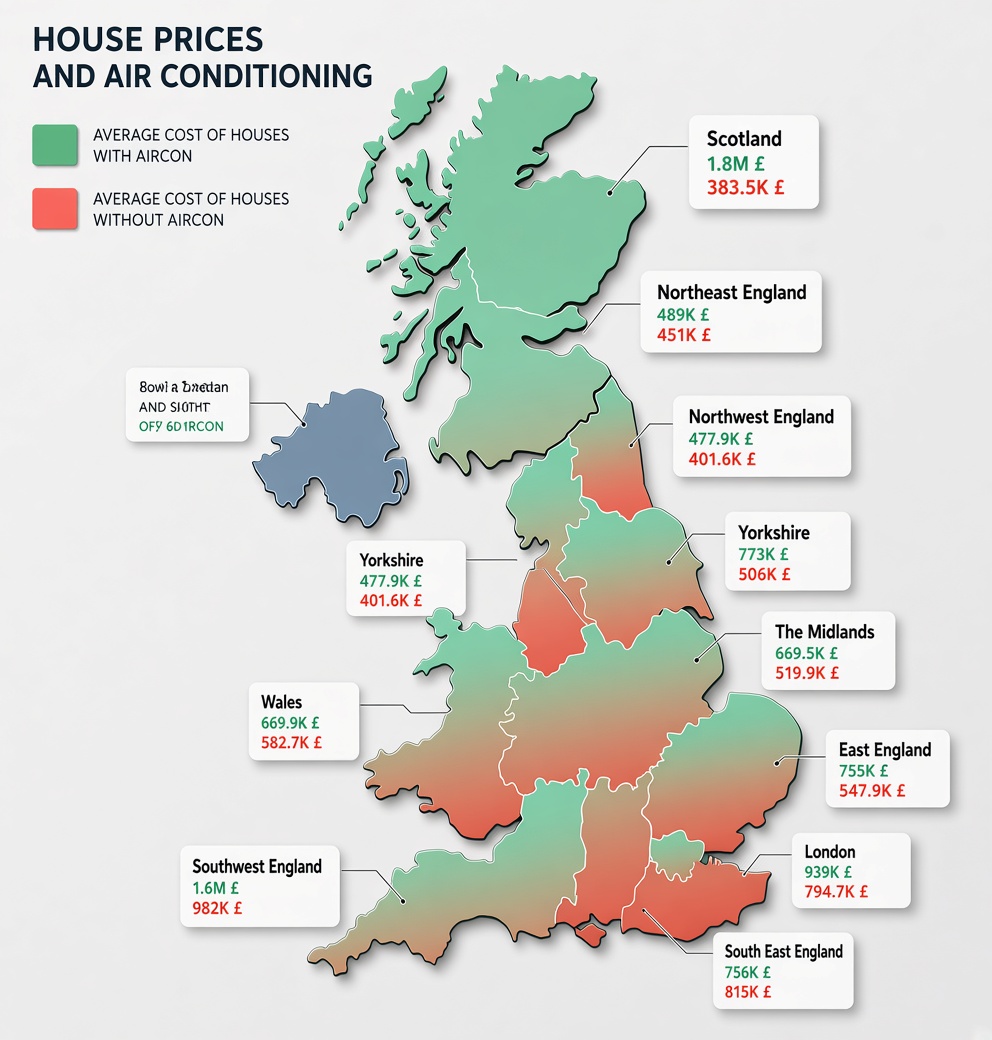
How Many UK Homes Have Air Con And Why More Now Want It
Less than 5% of UK homes have air con. In the US, most homes do. In the UK, it was once seen as a high-end add-on. That view is changing — and fast.
The State of Play
of UK homes currently have air conditioning
Compare that to over 90% of homes in the US. Each year, more UK homeowners say they wish they had it — particularly after a run of hot summers.
Each year, heat in the UK lasts longer. Hot spells are more intense. More homes now trap heat. Old brick homes built to keep warmth in do not cope well with 30°C summers.
Why Air Con Is Rare In The UK
Four factors explain it:
- Mild summers historically — the need simply wasn't there
- Old brick homes built to retain heat, not release it
- High upfront installation cost
- Low awareness of modern, affordable split units
Fans were once considered sufficient. For most of UK history, they were. That is no longer true for a growing number of households.
Heat Is Now A Real Health Risk
Hot days above 30°C are more common. Some UK towns have recorded 40°C. Heat affects sleep, productivity, and health — especially for older people, children, and those with existing health conditions.
| Health Issue | Risk In Prolonged Heat |
|---|---|
| Poor sleep | Low mood, reduced work performance |
| Heat rash | Skin irritation and discomfort |
| Heat exhaustion | Dizziness, nausea, fatigue |
| Heat stroke | Can be life-threatening without treatment |
Why More Homes Now Overheat
New homes use large glass panels, flat roofs, and open-plan layouts — all of which trap solar heat through the day. Urban flats face additional heat from roads, brickwork, and reduced airflow. This is known as the urban heat island effect.
Even well-insulated homes can become uncomfortably hot in summer because insulation works both ways — keeping heat out in winter, but trapping it in during a heatwave.
Is Air Con The Answer?
Modern split units are quiet, efficient, and need no large ductwork. Most are A-rated or above and provide both cooling and heating — giving year-round value. Here is the honest picture:
✓ Pros
- Fast, reliable cooling
- Better sleep quality
- Year-round use (heat mode)
- Filters dust and pollen
✗ Cons
- Upfront installation cost
- More complex to fit in older homes
- Running cost in peak heat
- May need planning permission
Cost Guide
A single room split unit typically costs from £1,500 installed. Multi-room systems range from £3,000 upward. Running costs vary by use — high-SEER units on off-peak tariffs cost significantly less per hour.
A full national roll-out of air con to every UK home has been estimated at over £40 billion. For individual households, the decision is simpler: one well-sized unit for the rooms used most often is often all that is needed.
Other Ways To Cool A Home
These alternatives can help — but in long hot spells, they often are not enough on their own:
Ready To Plan A Cooler Home?
We install and service air conditioning across South Wales. Get in touch for a fast, accurate quote — and advice on the right unit for your property.
Get a Quote →